Why is the ground loop so important for geothermal?
The ground loop, also known as a ground source heat exchanger, is the most important part of a geothermal system and here is why it matters so much.
Your ground loop is the energy source for any geothermal (aka ground-source) heat pump and has a huge impact on how the system performs. The ground loop is not only the key factor determining system efficiency and operating costs, but also has a major effect on the longevity of the geothermal heat pump. A good geothermal designer fully understands how critical it is to have a properly sized ground loop to maximize the potential of this amazing technology.
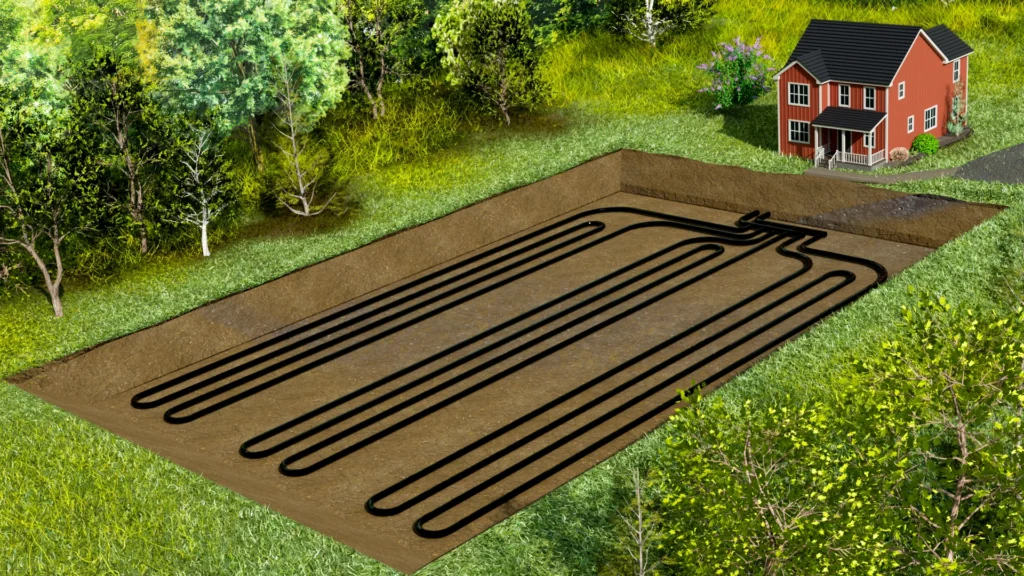
Effects of a well-designed loop:
1) Higher Efficiency
First let’s look at system efficiency. The performance of the ground loop determines the temperature of the water that enters your home and provides energy to the geothermal equipment. In heating mode, the higher the water temperature, the less water needs to be moved to get enough energy to heat your home.
When the ground loop is undersized, the geothermal equipment sees lower water temperatures and must work harder to provide proper heating for the building. This lowers the system efficiency and limits the potential of the geothermal equipment installed. Good ground loops are able provide stable water temperatures no matter the outside temperature and allow for the incredible efficiencies only found with geothermal heating and cooling systems.
2) Lower Operating Costs
Operating costs are also directly connected to how well the ground loop performs. A properly designed loop field allows the geothermal system to run at maximum efficiency using less electricity throughout the entire year. The better the ground loop design, the lower the monthly energy bills for the lifetime of the system. Geothermal systems are the most energy efficient heating and cooling option available, allowing for massive cost savings with a properly designed ground loop.
3) Longer Equipment Life
A good ground loop also protects the geothermal equipment itself. Stable entering water temperatures reduce strain on the heat pump and the internal components. Geothermal systems connected to undersized ground loops, however, experience more wear and tear, causing stress that can lead to premature equipment failures and reduced lifespan. A well-designed loop reduces strain on the geothermal unit, helping it run smoothly for decades.
So, what does a good ground loop look like?
There are a lot of factors that determine what a good ground loop looks like. The size of the equipment installed in the home, available land space and the type of soil must all be considered in a good design. Well-designed ground loops consider the unique elements of each property to provide an optimal heat exchanger for your home with a custom layout. The ground depth, loop field size, piping layout and soil types are all factors that determine how well the ground loop will perform under worst case conditions. Cookie cutter designs that are the same for each property are not appropriate and the best geothermal installers understand that a custom design is required to provide the foundation for a great geothermal system.
So, let’s go over how a good ground loop design is created and what is considered.
1) Depth
How deep the ground loop is installed plays a large role in how the loop field performs, regardless of the type. Whether it is a vertical design with drilled holes, a horizontal design with trenches or a pond loop buried underwater – the further the loops are installed from the surface, the more stable the ground temperatures. Deeper ground loops perform better and provide more even water temperatures no matter what temperature is experienced on the surface.
2) Size
The overall size, or amount of earth touched directly determines the performance of the ground loop heat exchanger. When the loop field is spread out and interfacing with more of the stable earth temperatures, more thermal energy is able to be absorbed by the ground loop, proving better water temperatures for the geothermal equipment inside the building.
3) Layout
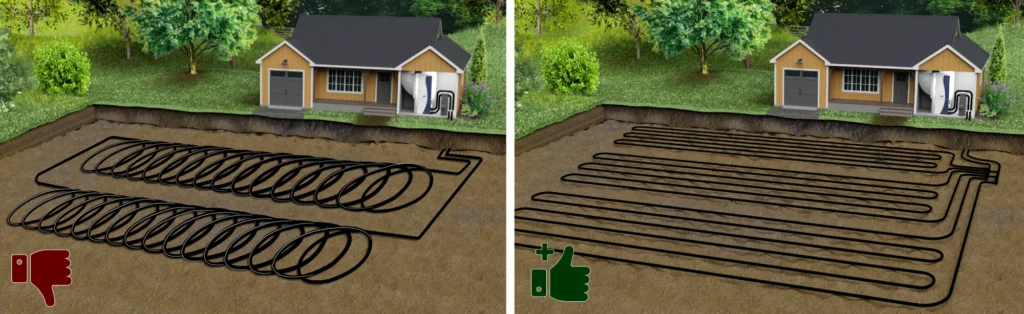
The layout of the ground loop is another important design factor to consider. When the piping is spread out and more separated from each other, the performance of the loop field is increased. Piping installed to close together or overlapping reduces the amount of heat transferred into the loop field from the earth and impacts the water temperatures achieved. Ground loop designs that use slinky coils or horizontal bores must be significantly oversized to account for the heat transfer lost by piping being too close together. It is important for all ground loop types to consider this characteristic and provide an appropriate layout for the equipment installed.
4) Soil Type
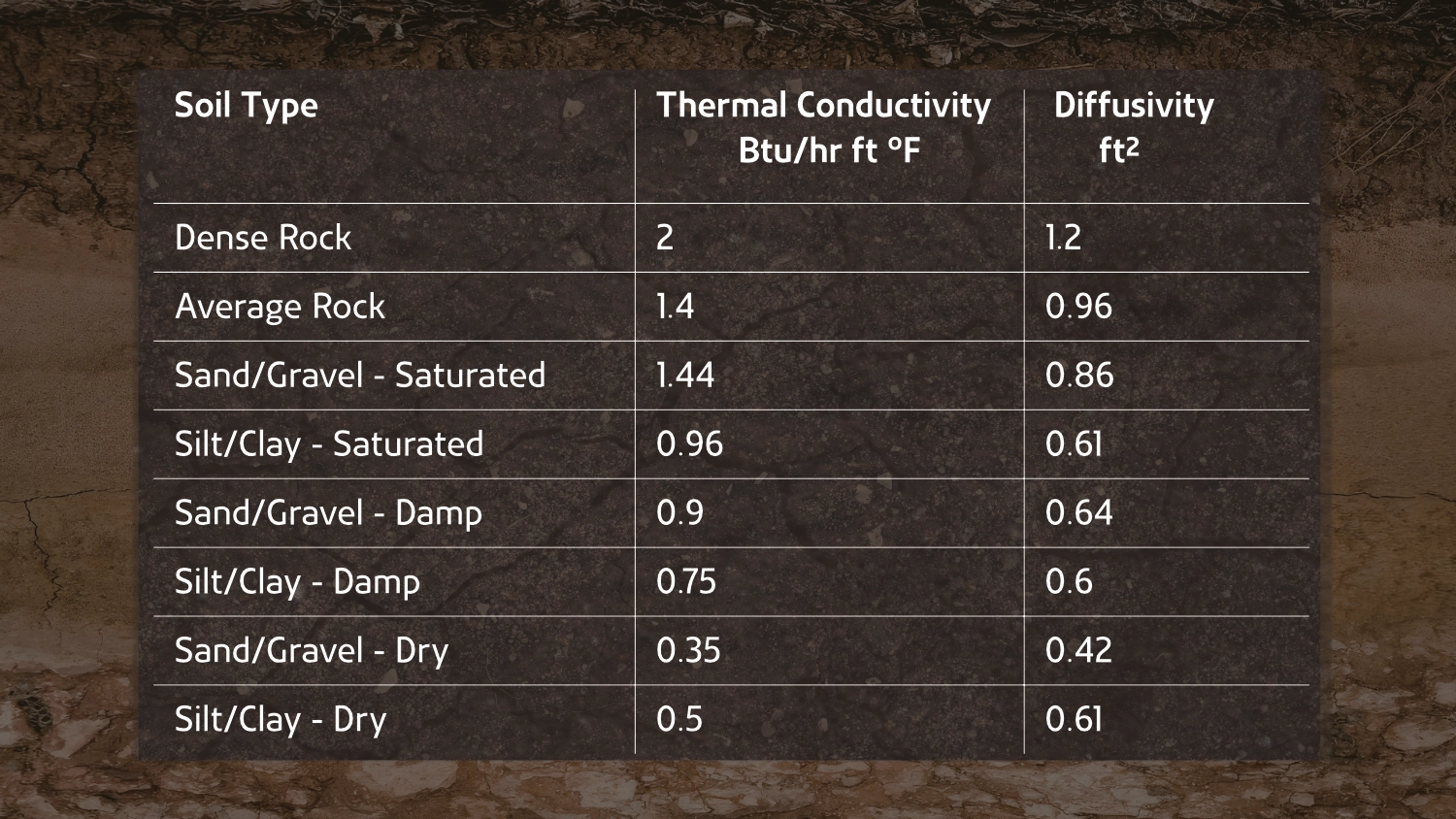
The types of soil and rock where the loop field is installed play a major role in the performance. Some soils are denser than others and not all rocks are the same, affecting how quickly heat is transferred into the ground loop. The moisture content of the soil also determines how well the loop field exchanges thermal energy, with wetter soils performing better. It is very important that the soil or rock is classified property in the design to make sure that heat transfer is modeled for the conditions onsite.
How to ensure you get a good loop?
There is nothing worse than investing in something incredible like a geothermal heat pump and not getting the performance promised due to an improperly designed system. Many companies design the ground loop to the absolute minimum recommended amount of excavation and piping for the cheapest possible cost or use a cookie cutter design for every situation.
Make sure your geothermal installer is providing you with a detailed report on the ground loop heat exchanger, clearly identifying:
- The minimum entering water temperature for the designed depth of trenching/drilling.
- Selected soil conditions.
- The total linear feet of earth touched by the ground loop.
The best types of ground loops are nice and deep, long and cover a wide area. By touching more of the earth, the entering water temperature can remain in a good range for the heat pump to operate at maximum efficiency and last for decades.
Cutting corners on the ground loop heat exchanger is one of the worst things a geothermal installer can do and is a huge disservice to the homeowners. Demand that you are given a detailed design report for the geothermal ground loop and hold the installation team accountable to meet the design so you can get geothermal done right.
Protect your investment and make sure you get a good ground loop!
Related Articles
Geothermal System Costs: Considerations
The cost of geothermal systems varies. This depends on specific customer information, such as property details and needs. These systems are gaining popularity due to rebates and tax credits.

Can You Use Existing Ductwork With A New Geothermal System?
System sizing and air distribution throughout the home are the primary factors for year-round comfort. Ductwork designed with comfort in mind brings even temperature in every room and steady, cozy rooms for your family.
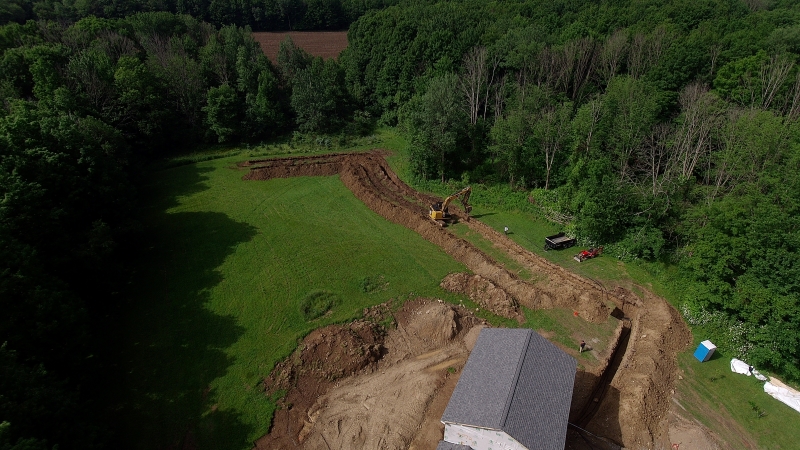
Ground Loops: How Much Drilling and Digging?
The most invasive part of geothermal installation is digging and drilling the ground loops, which serve as the heat source. Proper installation is essential to avoid undersized or malfunctioning loops.